
The role of the Laboratory of Soft Energy Applications and Environmental Protection of the Department of Mechanical Engineering of the PADA
The dramatic changes in the energy sector over the last 50 years, combined with the threat of climate change, are leading to the reduction of the use of fossil and finite (conventional) fuels and the gradual change of the energy mix of our planet and especially of the EU and our country. At the same time, mankind has begun to understand the problems of environmental degradation and the exceeding of the carrying capacity of our planet (depletion of water reserves, soil degradation and deforestation, air and sea pollution, etc.), so that activities have been initiated to slow down these phenomena by encouraging the optimal management of natural resources and the application of the principles of the circular economy. As is obvious, all the technological solutions under development in the fields of Energy and the Environment need well-trained, dynamic and environmentally and socially sensitive engineers with a modern outlook, who, with their knowledge, innovative thinking and combativeness, can contribute to a just and socially sensitive green energy transition, using the basic principles of the circular economy and sustainable development.
The Department of Mechanical Engineering with the start of the 5-year curriculum and its integration into the Faculty of Engineering of the PADA is an internationally and nationally recognized engineering department with specialization in modern issues of the Energy and Environmental sector, a fact that is confirmed by the dynamic program of Postgraduate and Doctoral Studies, which supports and includes about 20 active doctoral candidates and several postdoctoral researchers.
Continuing the positive tradition of TEI of Piraeus, the graduates of the 5-year Department of Mechanical Engineering of PADA are directly absorbed by the local market in Energy and Environment, while several of our graduates develop their careers abroad, successfully pursuing professional careers and academic positions in Universities and Research Centres abroad.
The educational and generally scientific/research activity of the Department in the fields of Energy and Environment is described below.
In this context, having envisioned since the early 1980s the upcoming developments, the higher education of engineers gradually began to introduce in the curricula of the EU’s and consequently of our country’s universities, courses on the treatment of air and marine pollution, the saving and rational use of energy and the utilization of renewable and soft forms of energy. These courses were initially started as electives for those students who showed interest in them, and soon became core courses in the curriculum due to the high interest of students. Today we now have entire courses of study or even university departments oriented towards the fields of Energy and the Environment. Moreover, there is no engineering discipline that does not include environmental courses in its undergraduate curriculum, while a simple research can prove the large number of Master’s Degree Programmes in the fields of Environment from every Faculty and engineering discipline within and outside the country.
Among the first departments of higher education, which recognized the upcoming cosmogenic changes in time, are those of TEI of Athens (Department of Energy Technology) and TEI of Piraeus (Department of Mechanical Engineering). Particularly in the Department of Mechanical Engineering (formerly Department of Mechanical Engineering) the course of Mild Forms of Energy with organized Laboratory Exercises was integrated as an elective compulsory from the end of the 1980s, so that it subsequently became a basic course of the curriculum, and to be accompanied by electives such as Environment and Industrial Development, Energy Saving and Rational Use of Energy, Air Pollution and Pollution Control Technologies, Applications of Low Energy, etc.α.
With the integration of the TEI and officially into the Universities of our country, the courses related to Energy and the Environment formed the basis of the Energy Sector of the Department of Mechanical Engineering, while similar developments were activated in the other departments of the TEI of Piraeus TT. With the establishment of the University of West Attica (PADA) and the creation of the School of Engineering, the fields of Energy and Environmental Protection are a strategic goal of the education of young engineers, providing them with the basic skills to pursue a career in the fields of Design-Implementation-Operation and Maintenance of RES projects, Energy Conservation and Rational Use of Energy projects and corresponding Environmental Protection and Upgrading projects, as well as in the newest sector of Green Transport. The success of the graduates of the Department has opened a new way of cooperation between the education of young students and the graduates, who as executives of large Energy Organizations transfer their experience through properly designed seminars and also utilize the enthusiasm of the new graduates in selected jobs. Today, the Department of Mechanical Engineering of PADA has a separate Energy-Environment and Sustainable Mobility section, following the standards of the National Research and Innovation Council (NRC), while the established Energy and Environment and Circular Economy Laboratories have been operating for years.
At the same time, since the beginning of the 21st century, the Department has been collaborating with the Open University of the UK on energy issues, while in 2005 the Department started to run an English-language MSc in Energy in collaboration with Heriot-Watt University in the UK. The success of this programme led to the evolution of the original MSc into the MSc in Energy Systems, a pioneering MSc leading to a joint degree (from PADA and Heriot-Watt) with direct recognition by the IOATAP. In addition, the ever-growing sectors of Energy and Environment provided the motivation for the organization (2014) of a new self-sustaining innovative MSc in Energy and Environmental Investments/Projects by the Department’s specialized staff. Both the Energy Systems and the Energy and Environmental Investments/Developments programs, both in English and in Greek, have been operating for many years, training hundreds of young engineers in the specialized and modern issues of Energy and Environment, who, in the context of their Diploma theses, contribute with high quality research results, which are published in international journals and presented in international and national conferences.
Knowing that the Energy sector includes all modern energy sources and without prejudice, the Department of Mechanical Engineering, with the support of the largest energy group in the country, Helleniq Energy (formerly HELPE) and the local government, proceeded to the establishment (2019) of a specialized MSc entitled “Industrial Oil and Gas Systems”, oriented to the optimal utilization of Liquid and Gaseous Hydrocarbons. The MSc has already implemented seven study cycles and its students are fully supported by scholarships from the Helleniq Energy Group and PADA.
In the same period of time and especially with the entry into the 21st century century, the Department of Mechanical Engineering has developed a particularly intense research activity in International and National Research Programmes, gaining a competitive advantage -through other modern and innovative research fields- in the utilisation of mild forms of energy and environmental protection. Significant research work has focused on isolated and mainly island regions, with emphasis on the development of Hybrid Energy Solutions, Energy Storage Technologies, Electromobility, Optimal Waste Management, Protection and Utilisation of Water Resources, etc. At the same time, the Department of Mechanical Engineering has developed strong links with local communities (urban and island communities), helping the respective municipalities to improve their energy situation and reduce their environmental footprint, through the design of small projects for the utilization of RES, desalination or information spaces for citizens, as well as by encouraging and participating in the creation of Energy Communities, giving the opportunity to young engineers to specialize in similar socially sensitive issues.
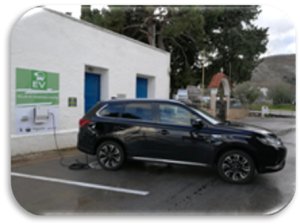
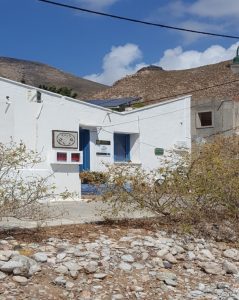
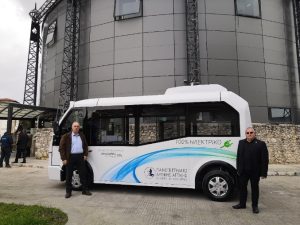
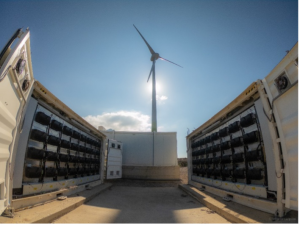
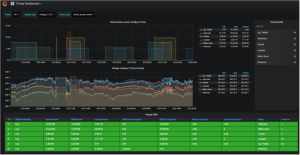
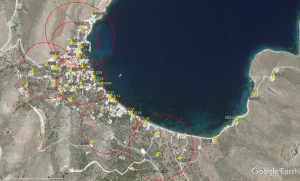
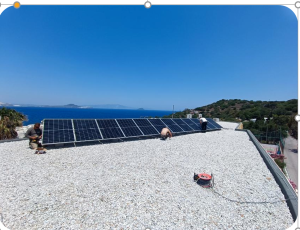
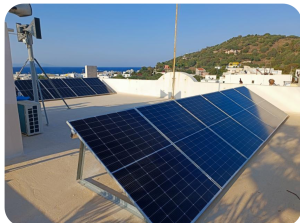
Some indicative results of the Department’s research efforts with real applications in operation are the first in operation (2018-…) Hybrid Station of Tilos (with installation of wind turbine, photovoltaic, energy storage and production-demand management) in the context of Horizon 2020, the optimal management system for the water resources of Tilos with the use of renewable energy sources in the framework of DARWEN (DARWEN), the energy planning of Nisyros (ZEN NESOI-Horizon), the investigation of the installation of a wave machine in Halki and Antikythera (NEPTUNUS-NESOI-Horizon) and the establishment of an energy community in Kythira, Chalandri and Nisyros, as well as the creation of an Autonomous Photovoltaic Power Plant with Energy Storage in Antikythera to cover the energy needs of the European Climate Change Observatory (PAGAIA) through the NISSOS Flagship Action.
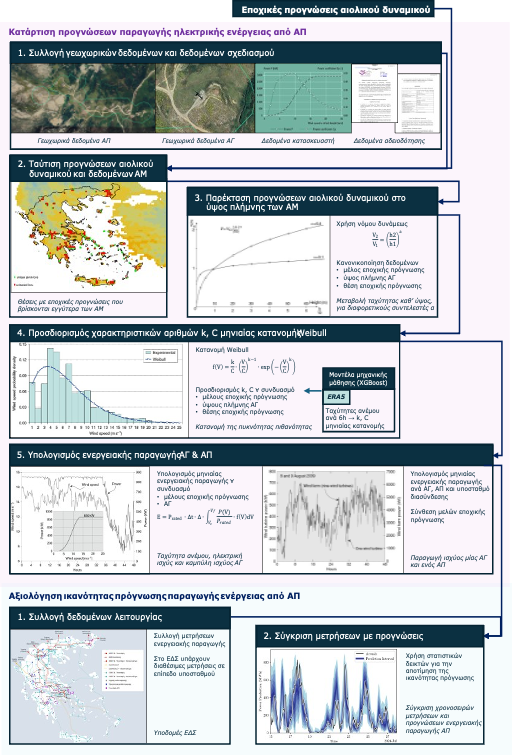
Medium-term forecast (2025) of Wind Farm energy production in the light of Climate Change, CLIMPACT-II
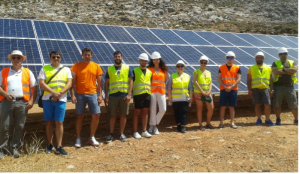
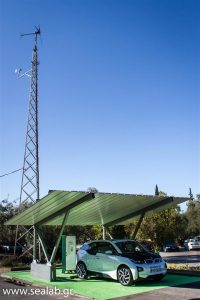
In addition, the Department of Mechanical Engineering of PADA participates with 22 other Universities and Research Centres in the national action for addressing the impacts of Climate Change “CLIMPACT”, while it contributes with its expertise to the implementation of the Flagship Action for “Just Green and Digital Transition-JustReDI”. Particular emphasis has also been placed for several years on supporting clean electromobility, with the development of the first green charging stations for electric vehicles at the PADA facilities (2014) and on the island of Tilos (2019) with the decisive participation of undergraduate and postgraduate students. Developing collaborations with related scientific fields, members of the Department participate in research projects on the sustainable protection of cultural heritage (Horizon-GreenArt) as well as on big data management and artificial intelligence (Horizon-BD4RNG), opening new fields of knowledge and professional rehabilitation for the students of the Department. In all of the above research activities, the graduate and undergraduate students of the Department play a key role, contributing with field measurements, calculations and laboratory analyses, gaining experience and up-to-date knowledge. For this purpose, for several years (since 2018), a Summer School has been organized on the islands of Tilos-Nisyros-Halki, where the participating students, apart from the specialized theoretical knowledge they acquire, have the opportunity to gain hands-on experience regarding real Energy and Environmental projects that are in operation, but also to get to know the local problems of our border islands, in order to contribute to their solution with their knowledge and environmental sensitivity.
At the same time, the Department of Mechanical Engineering of PADA participates as a co-organizer or organizes independently international and established national conferences, such as the International Solar Energy Conference ISES-August 2020, the international conference on Atmospheric Pollution COMECAP-September 2023, the well-established 13th National Conference on Mild Forms of Energy-May 2024 and the international conference Sustainable Solutions at Times ofTransition-SUST2025 (forthcoming in Nisyros in September 2025). Along with the organization of scientific conferences, the staff of the Department in collaboration with Research Associates, Postdoctoral Fellows, Postgraduate and Undergraduate Students produce high quality scientific work (with publications in international journals and presentations in established scientific conferences), while textbooks have been written by the faculty members of the Department for the majority of the courses of the Curriculum, which are successfully distributed to all other Universities in the country.
During the last 25 years and with the extensive research activity and the innovative MSc in Energy and Environment, in which students from all the country’s universities participate, the Department of Mechanical Engineering has developed a wide range of collaborations with almost all Greek Universities and Research Centres and a large number of foreign universities specialising in Energy and Environment, such as Sapienza University, the Technical University of Aachen, the KTH Sweden, the University of Corsica, Heriot-WattUniversity etc. The high recognition of the research work of the Department’s staff has contributed to these collaborations, which is confirmed by the more than 20,000 international references to the work of the scientific staff dealing with Energy issues and by the fact that at least five members of the Department, serving the fields of Energy and Environment, are listed in the annual Stanford lists, which include 2% of the most recognized researchers on our planet. Finally, the scientific staff of the Department, who are involved in the above mentioned areas of knowledge, contribute with specialized scientific chapters to a large number of international publications, while experienced members of the Department publish or participate in flagship English-language publications of research results on cutting-edge technology issues.
In summary, taking into account the positive developments in the Energy and Environmental Sector over the last 25 years and the vision for an economy with a minimal environmental footprint and zero greenhouse gas emissions, it is clear that the role of Engineers, and especially Mechanical Engineers, is crucial, underlining the challenges and the great opportunities for young engineers, and especially those who exploit the scientific-research potential of the Department of Mechanical Engineering of the Faculty of Engineering.
Dr John K. Kaldellis, Professor of Pedagogical Sciences
Director of the Established ENERGY Laboratory, PADA
former Vice Rector for Research & Lifelong Education and Research (2019-2023)

